Kylie and Tygacould
not co-exist because their relationship became an unrelenting test of
who was more important ... at least that's the way Tyga sees it.
Sources connected with Tyga tell us, he was battling Kylie almost
daily over who should kowtow to who when there was a scheduling
conflict. They were fighting over which events they'd attend together,
which required one of them to scrap their plans.
Tyga is telling friends the Kardashians fueled the
conflict because Kylie would complain about him and the family would
stoke the coals by telling her that her career was far more important
than his.
Tyga's people say this did not come to a head Thursday ... it's been brewing for weeks.
Apparently, the Kardashians don't see it the same way ... our K
sources say Tyga did something to trigger the breakup, and Kylie's the
one who pulled the plug.
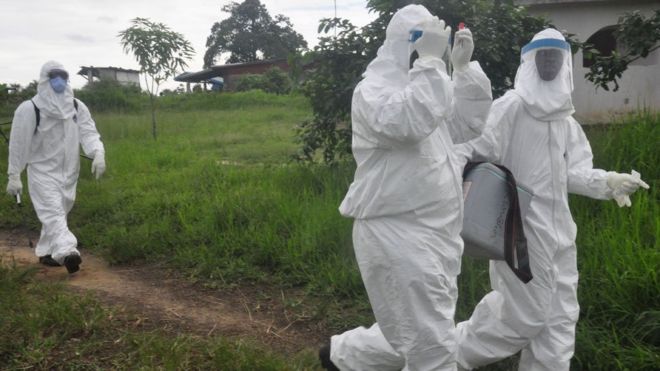
Three new cases of Ebola have been
confirmed in Liberia less than three months after the country was
declared free of the virus, the World Health Organization (WHO) has
said.The three patients include a 10-year-old boy from Paynesville, a suburb of the capital Monrovia.
All people with the symptom have been isolated, WHO spokeswoman Margaret Harris told the BBC.
Liberia has seen more than 10,000 Ebola cases and more than 4,000 deaths.
The
country's Health Minister Bernice Dahn said six of the boy's relatives
and other high-risk contacts have been taken to an Ebola Treatment Unit
in Paynesville.
"The hospital is currently decontaminating the
unit. All of the healthcare workers who came in contact with the patient
have been notified," she said.
On Thursday night, before the new
case emerged, President Ellen Johnson Sirleaf delivered a speech
praising "the resilience" of Liberians in overcoming the epidemic.
The country was first declared Ebola-free on 9 May, but new
cases emerged in June resulting in two deaths. It was declared free of
the virus again on 3 September.
Liberia
recorded its first Ebola case in March last year and analysts believe
the latest cases are a serious set-back for the country.
The new cases in Liberia was announced just days after Guinea, where the epidemic started, said it had no more Ebola cases.
If no more cases are detected for 42 days, it would be declared free of the virus.
Sierra Leone was declared free of Ebola on 7 November.
More
than 11,000 people have died of the disease since December 2013, the
vast majority of them in Liberia, Guinea and Sierra Leone.
US regulators have given the
go-ahead to genetically modified salmon, making it the first GM animal
destined for human consumption.
The Food and Drug Administration said it had given approval on the grounds that "food from the fish is safe to eat".
The biotech company behind the fish, AquaBounty, first submitted its application almost 20 years ago.
Opponents say consumers do not want to eat genetically engineered seafood.
They have also expressed concern that the salmon could pose risks to other fish if it were to escape into the environment.
Dr
Bernadette Dunham of the FDA's Center for Veterinary Medicine said:
"The FDA has thoroughly analysed and evaluated the data and information
submitted by AquaBounty Technologies regarding AquAdvantage Salmon and
determined that they have met the regulatory requirements for approval,
including that food from the fish is safe to eat."
The FDA ruled that the salmon must be raised in tanks
on land at only two facilities in Canada and Panama. It will not be bred
or raised in the US.
Safety measures include producing fish that
are sterile to prevent cross breeding with wild fish "in the highly
unlikely event of an escape".
The transgenic salmon is a type of Atlantic salmon injected with a gene from Pacific Chinook salmon to make it grow faster.
'Game changer'
Dr
Ron Stotish, chief executive of AquaBounty, said the salmon was "a
game-changer that brings healthy and nutritious food to consumers in an
environmentally responsible manner without damaging the ocean and other
marine habitats".
He said the young reach adult size much
quicker than conventional fish, making it feasible to raise salmon in
tanks on land near urban areas.
However, it is unclear whether retailers will want to sell the salmon and whether the public will want to buy it.
Lisa
Archer, food and technology programme director at Friends of the Earth,
said despite the FDA's "flawed and irresponsible approval of the first
genetically engineered animal for human consumption, it's clear that
there is no place in the US market for genetically engineered salmon".
There are also uncertainties over how long it will take for the salmon to be produced in sufficient numbers for marketing.
Dr
Alison Van Eenennaam, an animal geneticist at the University of
California, Davis, said this process could take a couple of years.
"Legally
it could appear on a food plate tomorrow in the US but you've got to
grow your fish and get production in place," she said.
"We've had a very long wait to bring a genetically engineered animal to market."
Ecological concerns
Prof Helen Sang of the Roslin Institute at the University of Edinburgh said the approval by the FDA set a precedent.
"It's the first genetically engineered animal for food that's been approved anywhere in the world," she told BBC News.
"There's
been a feeling that many companies have been waiting to see if the US
will approve GM salmon before going ahead themselves."
However, Dr
Joe Perry, former Chair of the European Food Safety Authority GMO
Panel, said that if an application were made to raise GM salmon in
Europe the risk assessment "would require considerably more data".
"There
remain legitimate ecological concerns over the possible consequences if
these GM salmon escape to the wild and reproduce, despite FDA
assurances over containment and sterility, neither of which can be
guaranteed," he said.
Follow Helen on HTwitter.
YouTube owner Google says it will
help fund up to $1m (£650,000) in legal fees for some content creators
who have received copyright takedown notices.
It will step in if it feels their material is considered to be fair use.
However the firm admitted that only a handful of people have been chosen to benefit from this support.
Copyright
holders are able to make requests to Google - or other sites - to take
down content under the Digital Millennium Copyright Act (DMCA).
However
there are exceptions to the law, which vary around the world but can
include the use of other material for the purposes of commentary and
parody.
If a small portion of somebody else's work is used in this
context, or in news reporting or for teaching purposes in the US, it
can be exempt from copyright legislation.
"We are offering legal
support to a handful of videos that we believe represent clear fair uses
which have been subject to DMCA takedowns," wrote Fred von Lohmann, Google's copyright legal director, in a blog post.
The firm will keep these videos online in the US and cover the cost of any lawsuits, he added.
"We're
doing this because we recognise that creators can be intimidated by the
DMCA's counter-notification process and the potential for litigation
that comes with it.
"While we can't offer legal protection to
every video creator - or even every video that has a strong fair use
defence - we'll continue to resist legally unsupported DMCA takedowns as
part of our normal processes."
The videos that will be defended
are not visible in the UK but include two video game reviews and a piece
which contains news footage of Rachel Dolezal, the American woman who was born white but now says she is black, reports Wired.
Most of the Reserve Bank of India's
(RBI) 17,000 employees went on strike on Thursday in what the central
bank described as "mass casual leave".
The walk out resulted in
"some interruptions" to clearing and settlement operations at the
central bank, but it said that its systems were largely operational.
Four unions had called for the strike to demand better pension benefits.
It was also against reforms that would reduce the RBI's regulatory powers.
The
central bank has been in debate over its policy independence with the
government, which has been trying to assert more influence over the
RBI's interest rate setting process.
The government wants to create a rate-setting board with its appointed members to vote on such decisions.
The RBI has cut interest rates four times this year, with the latest move in September to boost growth as inflation hit a record low on tumbling commodity prices.
'Losing independence'
Union
leaders said the dispute over retirement benefits showed that the bank
was losing its independence, because it used raise pensions without
approval from the government.
Workers
want their pensions to be increased to reflect rising costs and
payments to former employees raised by $75 (£49) a month so that they
can afford healthcare.
The unions have warned of longer strikes in the near future if the central bank does not meet its demands.
The convicted (top-left to bottom-right): Serina Wee, Chew Eng Han, Sharon Tan, Kong Hee, Tan Ye Peng and John Lam
Six senior officials of Singapore's
City Harvest megachurch have been jailed over a $50m Singapore dollar
($35m; £23m) fraud case.
The evangelical church's pastor and
founder, Kong Hee, was jailed for eight years - others received between
21 months and six years.
The court ruled last month the group had misused church finances to fund the music career of Kong's wife, Sun Ho.
All denied the charges - the church had supported them during the trial.
State
prosecutors said before sentencing it was "the largest amount of
charity funds ever misappropriated in Singapore's legal history".
'Wrongful gain'
Known
for its slick image and wealth-focused brand of Christianity, City
Harvest Church (CHC) has some 17,500 members in Singapore and branches
around the world.
In 2002, its launched what it called the Crossover Project - a scheme to evangelise through Ms Ho's music career. The case has attracted considerable media interest in Singapore
The hope was that songs like China Wine - a tune with rapper Wyclef Jean depicting Ms Ho as a Chinese exotic dancer in Jamaica - would help spread the gospel.
A church-backed music production company aimed at helping her achieve mainstream success in the US was left with millions of dollars in losses when the project failed.
The six were convicted on 21 October of misappropriating S$24m of church funds for the music project, and using another S$26m in an attempt to cover their tracks.
They were found guilty of various counts of criminal breach of trust and falsification of accounts, although the judge accepted that there was no evidence of "wrongful gain" by the defendants themselves.
That lack of personal financial benefit from the fraud meant the judge did not impose the maximum sentences of up to 20 years, local media report.
Ms Ho herself was not prosecuted in connection with the case and did not attend Friday's sentencing.
She recently took over leadership of the church.
Convictions in full
Kong Hee, CHC founder: eight years.
Chew Eng Han, former fund manager for the church: six years.
Tan Ye Peng, deputy senior pastor: five years and six months.
Kim Kardashian and Kanye Westare
proving the old adage, "the rich get richer," because they're making
more on a single house than 10 random people combined will ever make in a
lifetime.
Kim and Kanye bought the sprawling Bel-Air mansion in 2013 for $9
million, and our sources say they spent around $2 million renovating it.
We've learned the home is going on the market in the next few days, and the asking price will be more than $20 million.
Our West L.A. real estate sources say they will get what they're
asking, and maybe more. The house is in a hot area of town and it's
likely they'll get multiple offers which will trigger a bidding war.
Here's the real bitch of it all ... they didn't even bother to live there. They moved to Calabasas to live with Kris for a while, and then bought a house in nearby Hidden Hills.
Rich people ... it's really hard to like them.
Kylie and Tygacould
not co-exist because their relationship became an unrelenting test of
who was more important ... at least that's the way Tyga sees it.
Sources connected with Tyga tell us, he was battling Kylie almost
daily over who should kowtow to who when there was a scheduling
conflict. They were fighting over which events they'd attend together,
which required one of them to scrap their plans.
Tyga is telling friends the Kardashians fueled the
conflict because Kylie would complain about him and the family would
stoke the coals by telling her that her career was far more important
than his.
Tyga's people say this did not come to a head Thursday ... it's been brewing for weeks.
Apparently, the Kardashians don't see it the same way ... our K
sources say Tyga did something to trigger the breakup, and Kylie's the
one who pulled the plug.
Three new cases of Ebola have been
confirmed in Liberia less than three months after the country was
declared free of the virus, the World Health Organization (WHO) has
said.The three patients include a 10-year-old boy from Paynesville, a suburb of the capital Monrovia.
All people with the symptom have been isolated, WHO spokeswoman Margaret Harris told the BBC.
Liberia has seen more than 10,000 Ebola cases and more than 4,000 deaths.
The
country's Health Minister Bernice Dahn said six of the boy's relatives
and other high-risk contacts have been taken to an Ebola Treatment Unit
in Paynesville.
"The hospital is currently decontaminating the
unit. All of the healthcare workers who came in contact with the patient
have been notified," she said.
On Thursday night, before the new
case emerged, President Ellen Johnson Sirleaf delivered a speech
praising "the resilience" of Liberians in overcoming the epidemic.
The country was first declared Ebola-free on 9 May, but new
cases emerged in June resulting in two deaths. It was declared free of
the virus again on 3 September.
Liberia
recorded its first Ebola case in March last year and analysts believe
the latest cases are a serious set-back for the country.
The new cases in Liberia was announced just days after Guinea, where the epidemic started, said it had no more Ebola cases.
If no more cases are detected for 42 days, it would be declared free of the virus.
Sierra Leone was declared free of Ebola on 7 November.
More
than 11,000 people have died of the disease since December 2013, the
vast majority of them in Liberia, Guinea and Sierra Leone.
US regulators have given the
go-ahead to genetically modified salmon, making it the first GM animal
destined for human consumption.
The Food and Drug Administration said it had given approval on the grounds that "food from the fish is safe to eat".
The biotech company behind the fish, AquaBounty, first submitted its application almost 20 years ago.
Opponents say consumers do not want to eat genetically engineered seafood.
They have also expressed concern that the salmon could pose risks to other fish if it were to escape into the environment.
Dr
Bernadette Dunham of the FDA's Center for Veterinary Medicine said:
"The FDA has thoroughly analysed and evaluated the data and information
submitted by AquaBounty Technologies regarding AquAdvantage Salmon and
determined that they have met the regulatory requirements for approval,
including that food from the fish is safe to eat."
The FDA ruled that the salmon must be raised in tanks
on land at only two facilities in Canada and Panama. It will not be bred
or raised in the US.
Safety measures include producing fish that
are sterile to prevent cross breeding with wild fish "in the highly
unlikely event of an escape".
The transgenic salmon is a type of Atlantic salmon injected with a gene from Pacific Chinook salmon to make it grow faster.
'Game changer'
Dr
Ron Stotish, chief executive of AquaBounty, said the salmon was "a
game-changer that brings healthy and nutritious food to consumers in an
environmentally responsible manner without damaging the ocean and other
marine habitats".
He said the young reach adult size much
quicker than conventional fish, making it feasible to raise salmon in
tanks on land near urban areas.
However, it is unclear whether retailers will want to sell the salmon and whether the public will want to buy it.
Lisa
Archer, food and technology programme director at Friends of the Earth,
said despite the FDA's "flawed and irresponsible approval of the first
genetically engineered animal for human consumption, it's clear that
there is no place in the US market for genetically engineered salmon".
There are also uncertainties over how long it will take for the salmon to be produced in sufficient numbers for marketing.
Dr
Alison Van Eenennaam, an animal geneticist at the University of
California, Davis, said this process could take a couple of years.
"Legally
it could appear on a food plate tomorrow in the US but you've got to
grow your fish and get production in place," she said.
"We've had a very long wait to bring a genetically engineered animal to market."
Ecological concerns
Prof Helen Sang of the Roslin Institute at the University of Edinburgh said the approval by the FDA set a precedent.
"It's the first genetically engineered animal for food that's been approved anywhere in the world," she told BBC News.
"There's
been a feeling that many companies have been waiting to see if the US
will approve GM salmon before going ahead themselves."
However, Dr
Joe Perry, former Chair of the European Food Safety Authority GMO
Panel, said that if an application were made to raise GM salmon in
Europe the risk assessment "would require considerably more data".
"There
remain legitimate ecological concerns over the possible consequences if
these GM salmon escape to the wild and reproduce, despite FDA
assurances over containment and sterility, neither of which can be
guaranteed," he said.
Follow Helen on HTwitter.
YouTube owner Google says it will
help fund up to $1m (£650,000) in legal fees for some content creators
who have received copyright takedown notices.
It will step in if it feels their material is considered to be fair use.
However the firm admitted that only a handful of people have been chosen to benefit from this support.
Copyright
holders are able to make requests to Google - or other sites - to take
down content under the Digital Millennium Copyright Act (DMCA).
However
there are exceptions to the law, which vary around the world but can
include the use of other material for the purposes of commentary and
parody.
If a small portion of somebody else's work is used in this
context, or in news reporting or for teaching purposes in the US, it
can be exempt from copyright legislation.
"We are offering legal
support to a handful of videos that we believe represent clear fair uses
which have been subject to DMCA takedowns," wrote Fred von Lohmann, Google's copyright legal director, in a blog post.
The firm will keep these videos online in the US and cover the cost of any lawsuits, he added.
"We're
doing this because we recognise that creators can be intimidated by the
DMCA's counter-notification process and the potential for litigation
that comes with it.
"While we can't offer legal protection to
every video creator - or even every video that has a strong fair use
defence - we'll continue to resist legally unsupported DMCA takedowns as
part of our normal processes."
The videos that will be defended
are not visible in the UK but include two video game reviews and a piece
which contains news footage of Rachel Dolezal, the American woman who was born white but now says she is black, reports Wired.
Most of the Reserve Bank of India's
(RBI) 17,000 employees went on strike on Thursday in what the central
bank described as "mass casual leave".
The walk out resulted in
"some interruptions" to clearing and settlement operations at the
central bank, but it said that its systems were largely operational.
Four unions had called for the strike to demand better pension benefits.
It was also against reforms that would reduce the RBI's regulatory powers.
The
central bank has been in debate over its policy independence with the
government, which has been trying to assert more influence over the
RBI's interest rate setting process.
The government wants to create a rate-setting board with its appointed members to vote on such decisions.
The RBI has cut interest rates four times this year, with the latest move in September to boost growth as inflation hit a record low on tumbling commodity prices.
'Losing independence'
Union
leaders said the dispute over retirement benefits showed that the bank
was losing its independence, because it used raise pensions without
approval from the government.
Workers
want their pensions to be increased to reflect rising costs and
payments to former employees raised by $75 (£49) a month so that they
can afford healthcare.
The unions have warned of longer strikes in the near future if the central bank does not meet its demands.
The convicted (top-left to bottom-right): Serina Wee, Chew Eng Han, Sharon Tan, Kong Hee, Tan Ye Peng and John Lam
Six senior officials of Singapore's
City Harvest megachurch have been jailed over a $50m Singapore dollar
($35m; £23m) fraud case.
The evangelical church's pastor and
founder, Kong Hee, was jailed for eight years - others received between
21 months and six years.
The court ruled last month the group had misused church finances to fund the music career of Kong's wife, Sun Ho.
All denied the charges - the church had supported them during the trial.
State
prosecutors said before sentencing it was "the largest amount of
charity funds ever misappropriated in Singapore's legal history".
'Wrongful gain'
Known
for its slick image and wealth-focused brand of Christianity, City
Harvest Church (CHC) has some 17,500 members in Singapore and branches
around the world.
In 2002, its launched what it called the Crossover Project - a scheme to evangelise through Ms Ho's music career. The case has attracted considerable media interest in Singapore
The hope was that songs like China Wine - a tune with rapper Wyclef Jean depicting Ms Ho as a Chinese exotic dancer in Jamaica - would help spread the gospel.
A church-backed music production company aimed at helping her achieve mainstream success in the US was left with millions of dollars in losses when the project failed.
The six were convicted on 21 October of misappropriating S$24m of church funds for the music project, and using another S$26m in an attempt to cover their tracks.
They were found guilty of various counts of criminal breach of trust and falsification of accounts, although the judge accepted that there was no evidence of "wrongful gain" by the defendants themselves.
That lack of personal financial benefit from the fraud meant the judge did not impose the maximum sentences of up to 20 years, local media report.
Ms Ho herself was not prosecuted in connection with the case and did not attend Friday's sentencing.
She recently took over leadership of the church.
Convictions in full
Kong Hee, CHC founder: eight years.
Chew Eng Han, former fund manager for the church: six years.
Tan Ye Peng, deputy senior pastor: five years and six months.
Kim Kardashian and Kanye Westare
proving the old adage, "the rich get richer," because they're making
more on a single house than 10 random people combined will ever make in a
lifetime.
Kim and Kanye bought the sprawling Bel-Air mansion in 2013 for $9
million, and our sources say they spent around $2 million renovating it.
We've learned the home is going on the market in the next few days, and the asking price will be more than $20 million.
Our West L.A. real estate sources say they will get what they're
asking, and maybe more. The house is in a hot area of town and it's
likely they'll get multiple offers which will trigger a bidding war.
Here's the real bitch of it all ... they didn't even bother to live there. They moved to Calabasas to live with Kris for a while, and then bought a house in nearby Hidden Hills.
Rich people ... it's really hard to like them.